Brake chopper installation
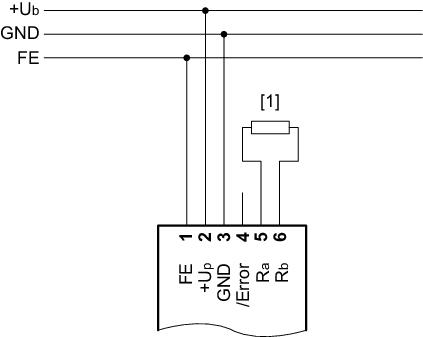
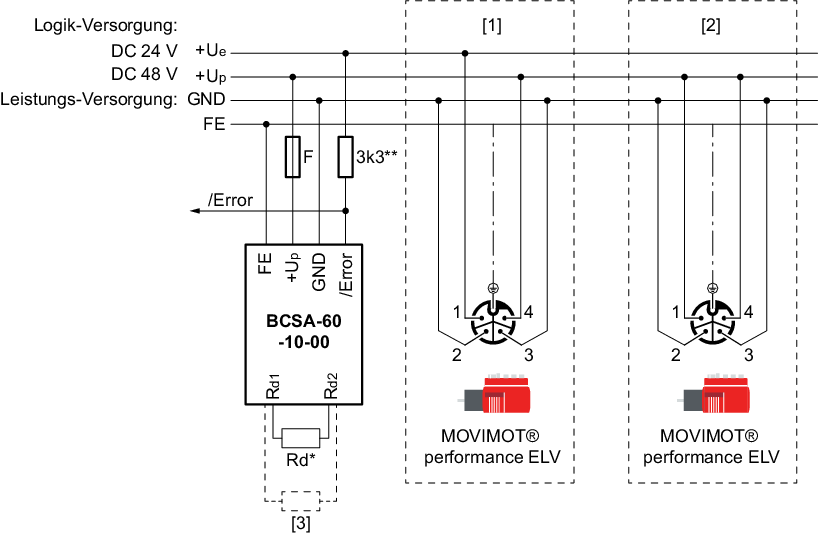
Observe the following information when connecting a brake chopper:
- Overloading the braking resistor results in high temperatures that can lead to a fire in the resistor or in adjacent assemblies. Appropriate fire protection measures must be provided on and around the braking resistor.
- To protect the braking resistor and the brake chopper from overload, a fuse must be provided in the supply cable to the brake chopper. The brake chopper has no internal fuse.
- Make sure that the device is connected correctly. The brake chopper is not equipped with polarity reversal protection.
- The operating range of the brake chopper must not be restricted by the overtemperature shutdown. In the event of a fault, the brake chopper's overtemperature shutdown prevents thermal damage to the device. Continuous operation of the device at the overtemperature limit is not permitted. This can reduce reliability and service life or lead to device failure.
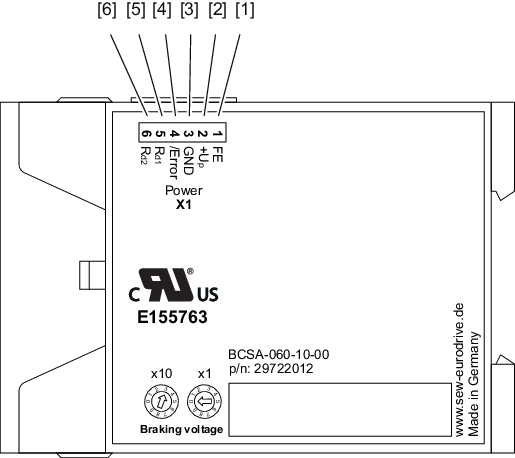
- The voltage level of the brake chopper must be set to above the maximum supply voltage. Here, the switch-off threshold as well as the tolerances of the power supply unit and the brake chopper must be taken into account. If the voltage value is set too low, there is a risk that the brake chopper will continuously dissipate current, thereby overloading the resistor.
- If the resistor is oversized, it cannot dissipate enough current, and the voltage rises above the set brake voltage. In this case, the brake chopper would be permanently active.
- If the resistor is defective, the voltage in the DC link will increase, which can lead to damage to the electronics.
- The user is responsible for protection against any possible incorrect setting.
Additional information