Audit
In the "Audit" tab, you can perform a check of the configured data containers and endpoints. An audit can include either individual or all data containers or endpoints.
When checking data containers, the individual data containers are activated one after the other and the container configuration is subtracted. In parameter containers, the configured parameters are read by the selected devices and then published as an event. In scope containers, the scope recorder of the selected devices is set up and then triggered automatically by the software. The data recorded in the scope recorder is then published as an event. As soon as an event has been published successfully, the data container is considered to have passed the audit.
INFORMATION: When starting the audit of all containers, all containers are first deactivated. During the audit, no container must be activated manually and no data is collected.
When checking endpoints, test data is uploaded to the corresponding endpoint. If the endpoint does not return an error message when uploading the data, the endpoint is considered to have passed the audit.
After completion of all audits, the displayed test report can be exported as a CSV file via the [Create report] button in order to subsequently open it with Microsoft Excel or other spreadsheet programs, for example.
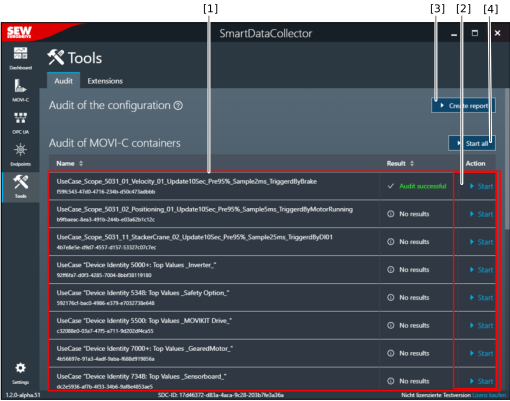

[1] | List of all data containers and endpoints with name and result |
[2] | Buttons to start checking an individual endpoint |
[3] | Export test report as CSV file |
[4] | Start a sequential check of all data containers and endpoints |
